

Ask better questions.
Find the real business problem before you jump to an answer.

[ Learning at RCMB ]
Business knowledge, put into practice. Build the thinking, confidence and judgement to make your next move.
[ A changing world. A learning habit. ]
Management starts with understanding people, markets and numbers. At RCMB, you practise using that knowledge: frame a problem, test an idea, work with others and explain a decision you can stand behind.
[ The development framework ]
How our days and sessions are designed at RCMB.

Find the real business problem before you jump to an answer.
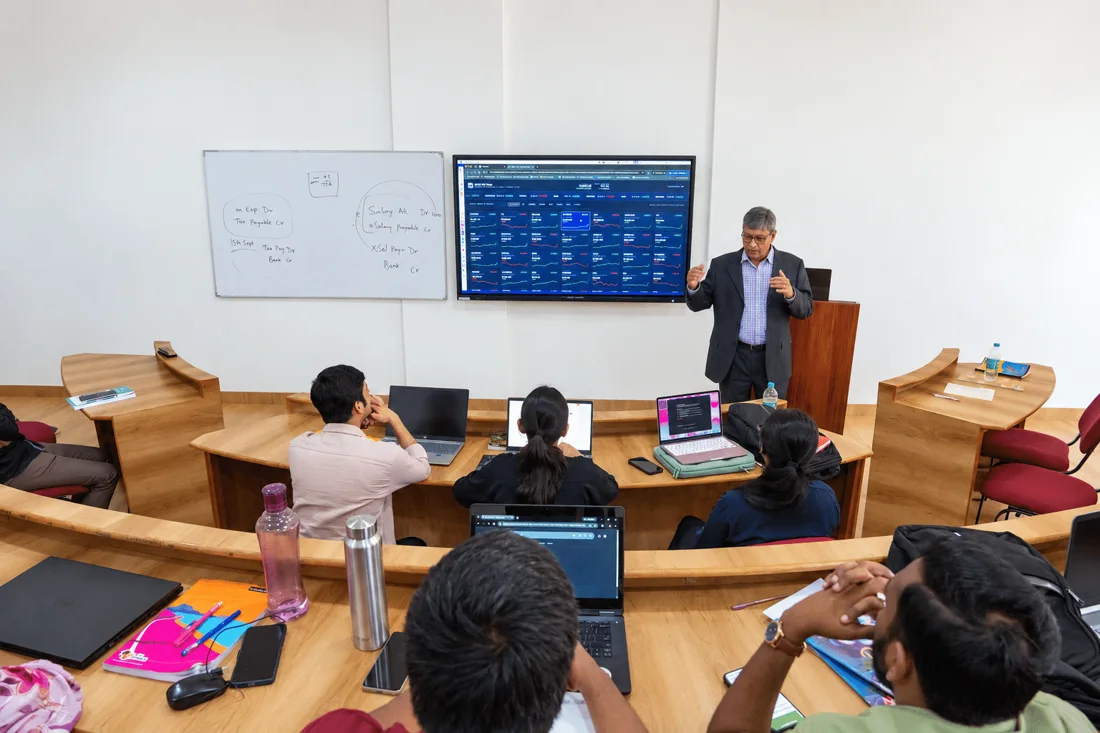
Read the data, test assumptions and explain what they mean for a decision.

Give tools a clear task, check the output and recognise their limits.
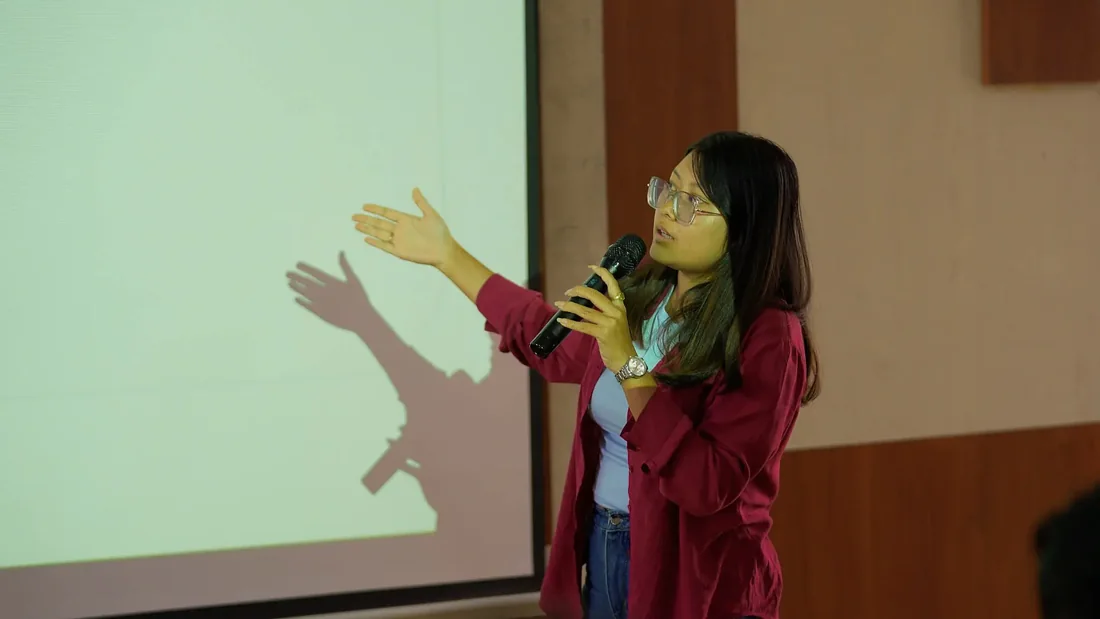
Explain your thinking, listen, negotiate and work through differences.

Meet commitments, act on feedback and finish work to a professional standard.
[ How you’ll learn ]
Different subjects need different kinds of practice. These are some of the ways you put your learning to work.
[ Simulations & role play ]
Take a role in a business situation: negotiate with a supplier, respond to a customer or defend a budget. New information can change the task. The debrief asks what you decided, why, and what you would change.
Practise: judgement, listening and ownership.
[ Projects & fieldwork ]
Investigate a focused business problem, gather evidence and recommend an improvement. Work through a live brief where available, or a realistic case pack. Build an output you can explain, test and improve.
Practise: problem framing, evidence and follow-through.
[ Cases & coached practice ]
Work through a case, a spreadsheet or a set of transactions. Faculty model the fundamentals, help you diagnose errors and challenge your reasoning. Discussion and repeated practice both have a place.
Practise: numerical confidence and clear reasoning.
[ Discussion & presentations ]
Explain your recommendation, listen to another view and answer questions. Peer challenge and faculty feedback help you refine both the idea and the way you communicate it.
Practise: communication, collaboration and revision.
[ How a session can look ]
A session could begin with a case like this. The subject and task change; the habits of thinking carry across.
Is the business losing money—or waiting for customers to pay? Separate the symptom from the real decision.
Read the profit statement, bank balance and unpaid invoices. Build and reconcile a short cash forecast.
After doing the analysis, ask AI to challenge an assumption. Check its reasoning against the case evidence.
Recommend an action to your team. Defend the trade-offs when another group takes the role of the CFO.
Revise your individual recommendation after feedback. State the action, who owns it and what to monitor.
Rotate the roles of customer, account manager and observer. Clarify what went wrong, check the facts and agree to a realistic next step. Use the observer’s feedback to improve an individual follow-up email.
The capabilities in practice: ask what the customer needs; understand the commercial impact; check any AI-assisted draft; listen and negotiate; own the commitment.
Review a customer evidence pack, compare segments and test a price. Present a recommendation, then adapt it when the demand assumption changes.
The capabilities in practice: define the market problem; compare costs and demand; verify AI-supported research; challenge ideas as a team; revise and deliver the plan.
[ The learning rhythm ]
A short reading, case or practice task gives you something to bring into the room.
Clarify the concept, practise the task and compare your reasoning with others.
Act on feedback. Correct the work, reflect on the decision and try again.
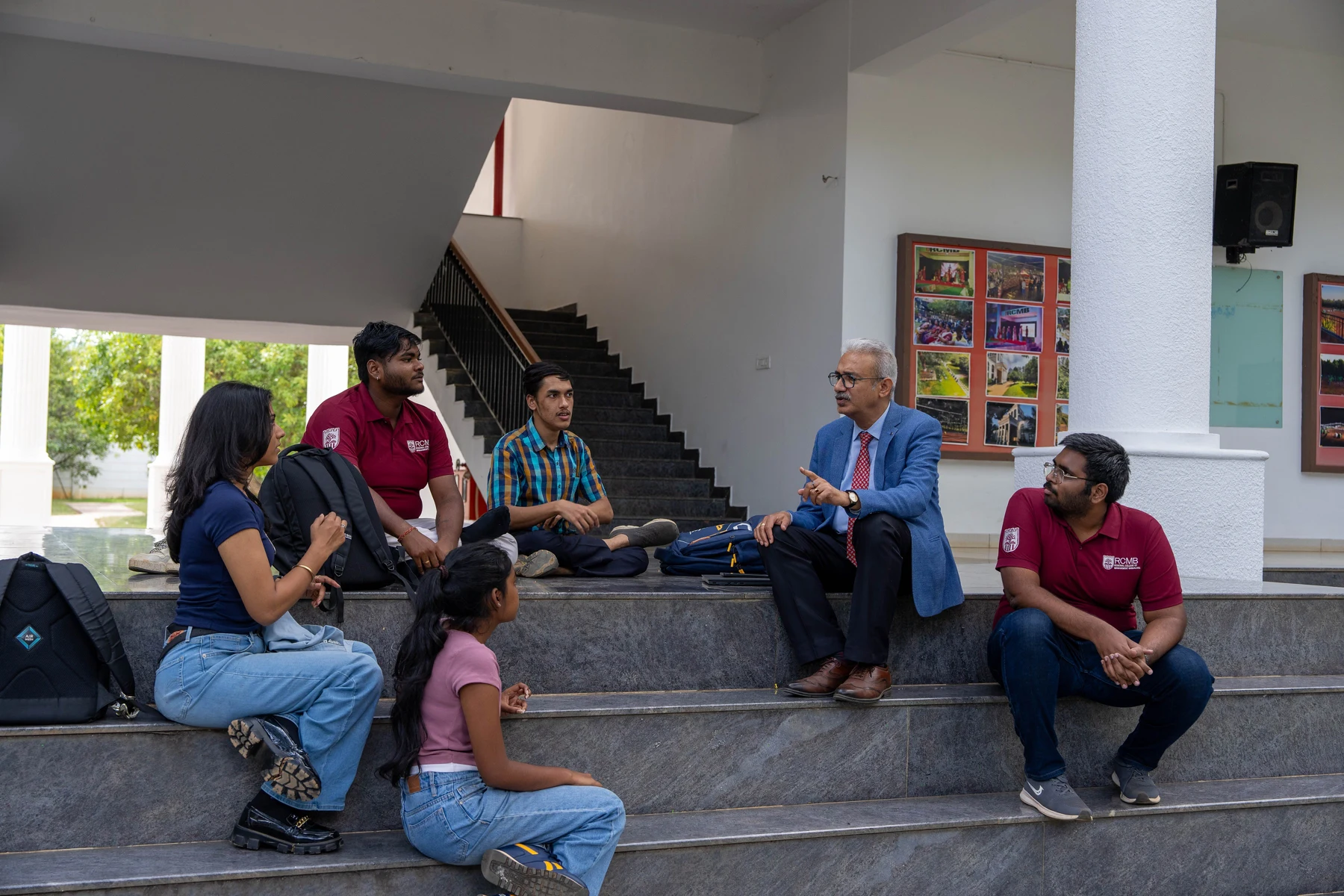
[ Personal mentorship ]
Your mentor helps connect your goals with the work you do here. Bring a project, a difficult presentation, a career question or an area you want to improve. Together, turn the conversation into a practical next step.
Explore mentorshipStart with your goals, strengths and the areas where you need support.
Turn those conversations into priorities in your Student Development Plan.
Review your work, get honest feedback and agree on the next action.
Follow through, reflect on progress and take greater ownership of your direction.
[ The AI edge ]
AI for Management Careers is included with both MBA and PGDM. Use it to research, analyse and build—while staying responsible for the result.
Explore AI for managementGive the tool a clear task and relevant context.
Test its sources, calculations and assumptions.
Make the decision and explain your reasoning.
[ MBA & PGDM · Admissions 2027 ]
Your next chapter
Bring your ambition. Bring your questions.
We’ll help you find your starting point.